UK Gambling Commission Releases Q2 2025-26 Stats: £4.3 Billion GGY as Remote Casinos Surge to £1.4 Billion
UK Gambling Commission Releases Q2 2025-26 Stats: £4.3 Billion GGY as Remote Casinos Surge to £1.4 Billion

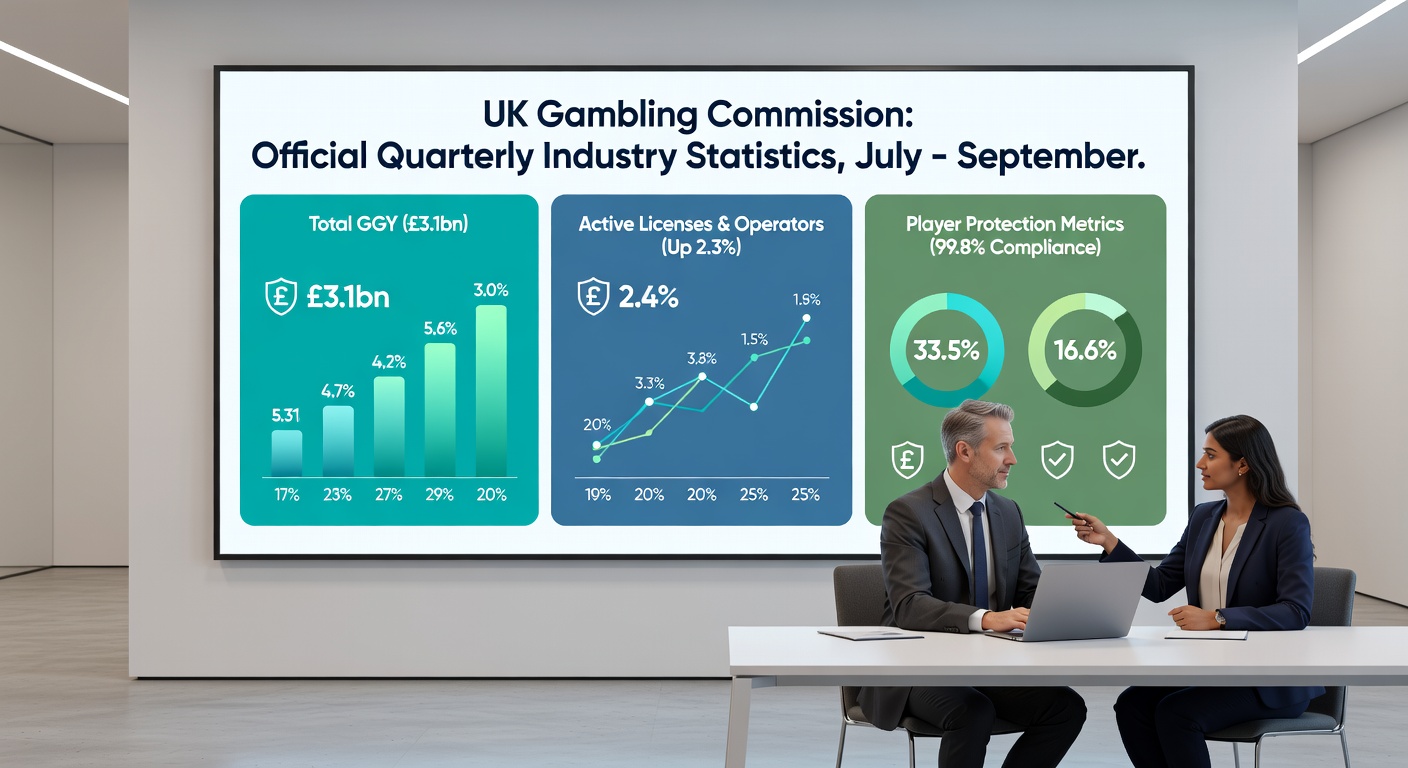
The UK Gambling Commission dropped its latest quarterly industry statistics for July through September 2025, covering Q2 of the financial year that runs from April 2025 to March 2026, and the numbers paint a clear picture of a sector humming along with a total gross gambling yield, or GGY, hitting £4.3 billion across Great Britain when lotteries get tossed into the mix.
Strip out those lotteries though, and the figure lands at £3.2 billion, a solid marker of activity in the core gambling channels that operators and regulators alike keep a close eye on since it captures the net win after player payouts, reflecting everything from bets placed to games spun in both digital and physical spaces.
Total GGY Breakdown: Lotteries Included and Beyond
Figures reveal that this £4.3 billion total GGY encompasses all regulated gambling activities in Great Britain for that three-month stretch, where lotteries contributed their usual hefty slice, yet the non-lottery segments still managed £3.2 billion combined, showing how betting, casinos, bingo, and slots keep the engine running even without the ticket sales boost.
What's interesting here lies in how these totals stack up within the broader financial year framework, as Q2 builds on whatever Q1 delivered back in April to June, setting the stage for the push toward March 2026 when the full-year tally gets finalized, and observers note that early momentum like this often signals trends carrying through seasons heavy with sports events or holiday spikes.
Remote Sectors Take the Lead with £2.0 Billion GGY
Remote casino, betting, and bingo sectors pulled in £2.0 billion in GGY during this period, dominating the online landscape where players tap into apps and sites from home or on the go, and within that, remote casinos stood out by generating £1.4 billion, accounting for a whopping 69.9% of the remote total, which underscores their pull in an era where smartphones make table games and slots accessible anytime.
Betting remotely chipped in alongside bingo, though the data highlights casinos as the heavyweight, with their £1.4 billion figure dwarfing the rest and reflecting player preferences for immersive digital experiences that mimic land-based thrills but scale up through volume and variety.
Turns out, this remote dominance isn't just a blip; experts tracking these quarterly releases have observed similar patterns quarter after quarter, where online channels capture more yield because they operate 24/7 without the overhead of physical venues, although that's balanced against the non-remote side still holding steady.
Non-Remote Sectors Hold Ground at £1.2 Billion
Shifting to land-based operations, non-remote sectors produced £1.2 billion in GGY, proving that bricks-and-mortar spots like casinos, arcades, and especially betting shops retain a loyal crowd even as online options proliferate, and this total folds in everything from slot machines in pubs to full-scale gaming floors.
Non-remote betting alone accounted for £592 million of that, spread across 5,782 betting shops dotting Great Britain, where punters still flock for the atmosphere of live matches on screens, quick flutters on horses, or chats with staff, a number of locations that speaks to the network's resilience despite closures in leaner times.
But here's the thing: while remote areas eclipse their physical counterparts two-to-one in yield, the non-remote £1.2 billion reminds everyone that high streets and leisure parks contribute meaningfully, particularly in betting where those 5,782 shops form a backbone that's easier to visit spontaneously than firing up an app sometimes.
Diving Deeper into Remote Casino's £1.4 Billion Dominance
Data from the quarterly report spotlights remote casinos grabbing 69.9% of the £2.0 billion remote pie, a share driven by slots, blackjack tables, roulette wheels, and poker variants that draw millions weekly, since platforms offer endless stakes and bonuses tailored to keep sessions going longer than a land-based visit might allow.
Researchers who've pored over these stats note how this £1.4 billion breaks down further into high-volume low-stake plays alongside big-ticket progressive jackpots, creating a yield that's both broad-based and spiked by whales, although the commission's figures aggregate it all without splitting hairs on game types just yet.
And while remote betting and bingo fill out the remaining 30.1% of that £2.0 billion, casinos' lead feels almost inevitable in a quarter sandwiched between summer sports and autumn leagues, where football and racing bets spike but digital tables quietly rack up more consistent wins for operators.
Betting Shops: 5,782 Venues and £592 Million Yield
Those 5,782 non-remote betting shops didn't just sit idle; they generated £592 million in GGY, a figure that captures over-the-counter wagers, fixed-odds machines, and virtual sports bets placed in person, where the tactile side of handing over cash or watching races unfold live keeps the doors open across urban centers and suburbs alike.
One case that surfaces in industry chatter involves shops in football-hotbed regions seeing upticks during matchdays, contributing to that half-billion mark, yet the total also factors in quieter weekdays balanced by weekends, showing a steady rhythm that's the hallmark of Britain's betting culture.
It's noteworthy that this shop count holds firm, down slightly from peaks years back but stable enough to underpin £592 million without relying on expansions, and as the FY heads toward March 2026, these venues likely gear up for spring festivals and major tournaments that could nudge the numbers higher.
Balancing Remote and Non-Remote in the FY Picture
Putting it all together, remote channels at £2.0 billion outpace non-remote's £1.2 billion by 67%, yet the two worlds coexist in this £3.2 billion non-lottery total, where online convenience clashes with in-person tradition, and lotteries then lift everything to £4.3 billion overall for Q2.
People who've studied these reports over multiple years point out how seasonal factors weave in, like summer transfers boosting betting or holidays extending casino play, although Q2 specifically captures a post-spring, pre-winter vibe that's transitional but potent.
So as March 2026 looms with its FY closeout, these Q2 stats serve as a midpoint checkpoint, with remote casinos' 69.9% remote share signaling where growth concentrates, while those 5,782 shops remind that £592 million doesn't vanish overnight.
Now, consider how bingo fits snugly into remote at a smaller slice of that £2.0 billion, often community-driven online rooms echoing hall traditions, whereas non-remote casinos and arcades round out their £1.2 billion beyond betting, creating a mosaic that's as diverse as the players fueling it.
Implications for the Road to March 2026
The reality is, with half the financial year behind it by September's end, this £4.3 billion Q2 yield positions the industry for a strong finish come March 2026, especially if remote trends hold and non-remote stabilizes amid economic shifts, since regulators use these benchmarks to tweak affordability checks or licensing tweaks.
Observers note that GGY's dual metrics, with and without lotteries, allow clearer sector views, highlighting remote's £2.0 billion ascent and land-based's reliable £1.2 billion anchor, complete with specifics like £1.4 billion casinos and £592 million shops.
That's where the rubber meets the road for stakeholders plotting Q3 and Q4 strategies, banking on sustained player engagement to mirror or exceed this quarter's haul.
Conclusion
In wrapping up the UK Gambling Commission's Q2 2025-26 release, the