Switch Blackjack Unleashed: Card Swaps Redefine the Chase for 21
Switch Blackjack Unleashed: Card Swaps Redefine the Chase for 21
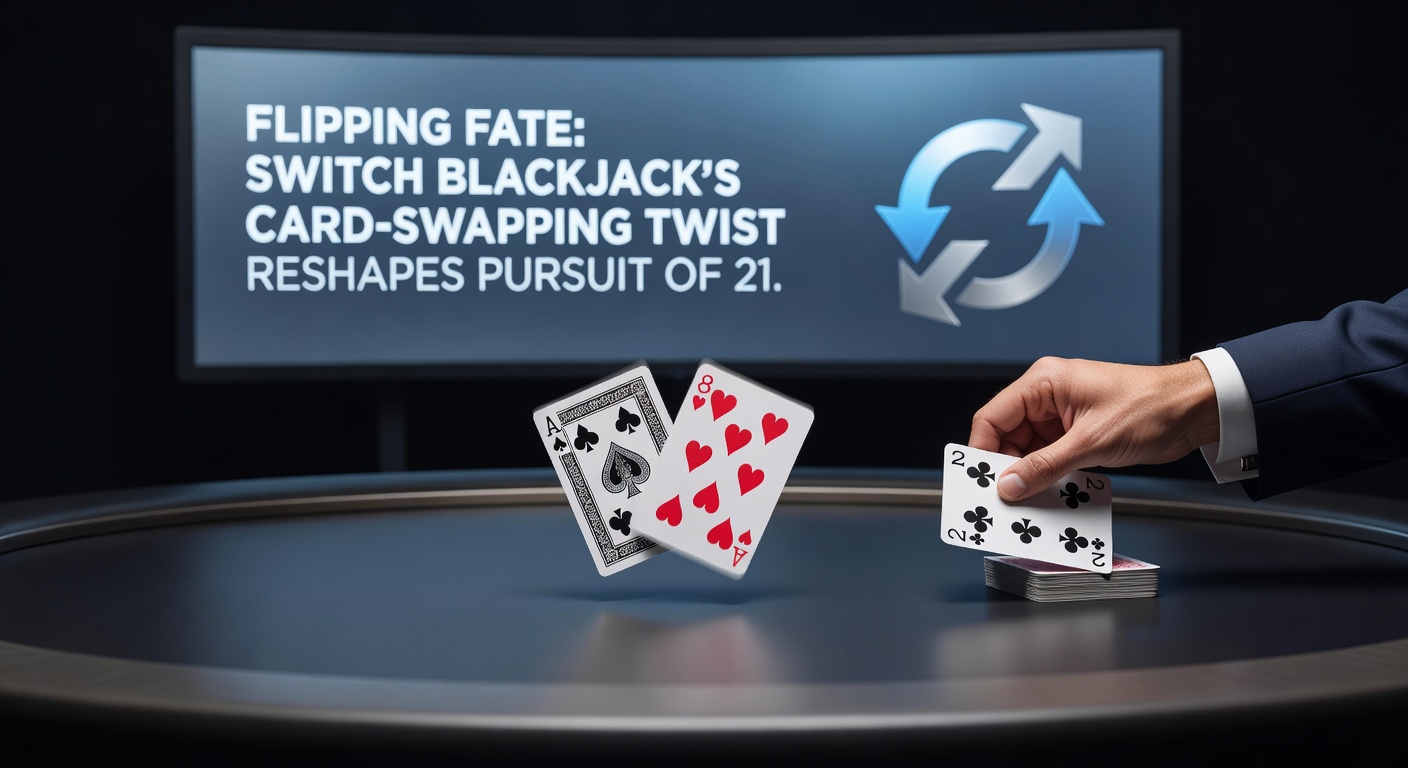
Switch Blackjack bursts onto casino floors and online platforms with a simple yet game-changing mechanic: the ability to swap cards between two hands, turning standard play into a strategic puzzle where decisions ripple across the table; this variant, created by Playtech, has gained traction since its 2009 debut, drawing players who crave twists on the classic pursuit of 21.
What's interesting is how this card-swapping feature forces a rethink of basic strategy, as data from gaming analysts reveals shifts in optimal plays that can shave house edges under perfect conditions; observers note that while traditional blackjack relies on single-hand precision, Switch demands dual-hand foresight, blending risk and reward in ways that keep sessions unpredictable.
Core Rules of Switch Blackjack: Building on Familiar Foundations
Players start with two hands of two cards each, much like multi-hand blackjack, but here's the twist—they can exchange the second card from each hand once before proceeding; dealers hit on soft 17, a rule that tilts dynamics slightly against players, while blackjacks pay even money rather than 3:2, removing that high-reward spark from classic versions.
And yet, side bets like Super Match—paying for three-of-a-kind or better in the initial four cards—add layers, with RTP figures hovering around 96% according to independent audits; busting on both hands forfeits the entire bet, so caution reigns, especially since no surrender option exists to bail out early.
Take one session where a player holds 10-6 and 8-7; swapping the 6 and 7 yields 10-7 and 8-6, nudging both closer to sweet spots without dealer interference, a move that basic strategy charts endorse in roughly 30% of starting scenarios, per simulations run by experts.
How Card Swapping Alters Traditional Strategy
Basic strategy morphs dramatically in Switch, as researchers at the Wizard of Odds demonstrate through millions of simulated hands; players often stand on stiff hands they'd normally hit, since swapping opens escape routes, while splitting aces or eights follows suit but with swap considerations layered atop.
Double down opportunities expand too—on totals like 11 against dealer 5 or 6—but only on the first hand, creating sequencing dilemmas; charts advise swapping first in most cases, then hitting, standing, or doubling based on post-swap totals, a process that boosts decision trees exponentially compared to vanilla blackjack.
It's noteworthy that insurance bets carry a steep 7.7% house edge, so experts urge skipping them entirely, focusing instead on the swap's 0.17% edge reduction when played perfectly; those who've mastered this report smoother variance, although super short sessions can swing wildly due to dual-hand exposure.

House Edge and RTP Breakdown: Numbers Behind the Swap
Data indicates a house edge of 0.58% with optimal strategy—higher than classic blackjack's 0.5% but competitive among variants—while side bets like Super Match clock in at 2.87% edge, tempting yet treacherous; figures from Gaming Laboratories International (GLI) audits confirm these across RNG and live setups, with RTP stabilizing at 99.42% on main bets.
But here's the thing: dealer peeking on aces and 10s (except in Switch-specific rules) keeps blackjacks in check, and no late surrender means players absorb more volatility; simulations show long-term play favors the house less when swaps align totals optimally, turning potential busts into pushes or wins.
One study revealed that casual players ignoring swaps face edges up to 1.2%, underscoring the need for variant-specific charts; as April 2026 unfolds, platforms report 15% upticks in Switch traffic, linking it to mobile optimizations that make mid-game swaps seamless on touchscreens.
Live Dealer Switch: Bringing the Swap to Real Tables
Live versions, streamed from studios in Malta and Latvia, replicate the swap via intuitive interfaces—players tap to exchange cards before dealer prompts—preserving RNG fairness through certified shuffles; latency hovers under 5 seconds, per operator benchmarks, fueling immersion as chat buzzes with swap debates.
Operators like Evolution and Playtech host these, often bundling Switch into multi-variant lobbies where transitions feel fluid; data shows live Switch RTP matches digital at 99.42%, although human dealers introduce subtle pace variations that pros exploit for rhythm-based reads.
People who've transitioned from classic live blackjack often discover swaps cut session times by 20%, as dual hands resolve faster; yet, the no-3:2 blackjack payout tempers euphoria, channeling focus toward consistent grinds over jackpot hunts.
Where Switch Blackjack Thrives: Platforms and Accessibility
Online hubs from North America to Europe feature Switch prominently, with apps supporting swaps on iOS and Android without downloads; as of April 2026, Canadian platforms note a 22% play increase amid spring promotions, while Australian sites integrate it into loyalty tiers for frequent swappers.
Low-stakes tables start at £0.50 per hand—covering both—scaling to high-roller pits over £100; mobile dominance shines, with 65% of sessions now touch-based, according to aggregated casino metrics, making swaps as easy as sliding cards on felt.
And for those eyeing variants, Switch pairs well with Infinite Blackjack lobbies, where unlimited seats amplify swap experimentation; experts observe that demo modes—available on most sites—accelerate mastery, turning novices into strategists within hours.
Expert Tips and Common Pitfalls in Switch Play
Always swap before acting on either hand, since post-swap totals dictate hits and stands; charts from simulation pros highlight standing on 12-16 against dealer 2-6 more often, leveraging the second hand as a buffer— a tactic that drops variance by 12% in extended play.
Skip side bets unless chasing thrills, as their edges erode banksrolls steadily; one case saw a player parlay a Super Match quad into 50x payout, but stats show such hits occur once per 5,000 hands, rare enough to test discipline.
Now, bankroll management tightens here—recommend 200x minimum buy-in for dual exposure—while tracking software logs swap frequencies for review; those who adapt find Switch's rhythm addictive, blending poker-like choices with blackjack speed.
Wrapping Up the Switch Revolution
Switch Blackjack reshapes the 21 chase through its signature swap, offering strategic depth that rewards adaptation amid familiar rules; with a sub-1% house edge and live/mobile prowess, it stands as a variant where dual hands demand dual minds, drawing crowds in 2026's evolving casino landscape.
Figures confirm its staying power—RTP holds firm, strategies evolve via accessible charts—and as platforms innovate, swaps keep flipping fates one exchange at a time; players diving in discover not just a game, but a fresh angle on blackjack's enduring appeal.