Layout Logic: The Hidden Influence of Screen Design on Blackjack Decisions in App-Based Play
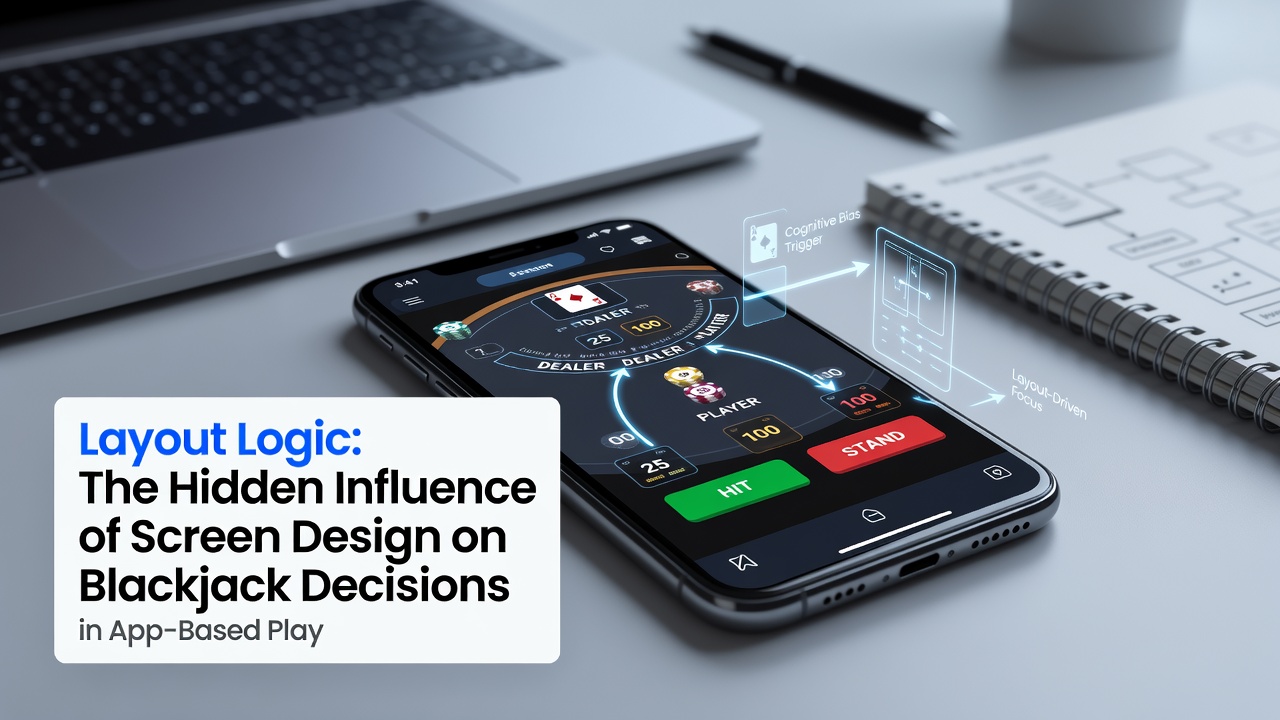
Screen design in app-based blackjack shapes how players process information during each hand, from the moment cards appear to the instant they select hit, stand, or double down. Developers arrange elements like button clusters, card animations, and color contrasts to guide attention, and those arrangements alter response times along with choice patterns according to multiple interface studies. In July 2026 mobile platforms continue to refine these details, yet the core mechanics remain consistent across many titles.
Button Placement and Decision Speed
Button location determines how quickly a player commits to an action, since thumb reach and visual scanning patterns favor certain screen zones over others. Researchers tracking eye movements have documented faster selections when primary controls sit within the lower third of the display, whereas scattered layouts increase hesitation by fractions of a second that compound across dozens of hands. One analysis of app telemetry showed that clustered buttons correlated with higher double-down rates on borderline hands, while dispersed controls produced more conservative stand decisions in similar situations.
Animation timing adds another layer, because brief delays between card reveals and button activation can shift perceived urgency. Data from session logs indicate players accept riskier plays when the interface responds instantly, whereas slight pauses allow extra calculation that favors statistically sound moves. Designers therefore balance responsiveness against clarity, and the resulting configurations influence overall session outcomes without any change to underlying rules.
Visual Hierarchy and Card Presentation
Card size, spacing, and layering affect how clearly totals register in the player's mind. Larger dealer cards positioned at the top of the screen draw immediate focus, yet overlapping player cards near the bottom can obscure running totals until the next refresh. Studies examining information density found that tighter card stacks reduced misreads of soft totals, while generous spacing improved recognition of pair splits. Color accents on specific ranks or suits further direct attention, and operators adjust these cues based on regional player data collected through A/B testing.
Background gradients and highlight effects reinforce or distract from key numbers. High-contrast chips against muted felt encourage bet adjustments before cards appear, and subsequent decision buttons inherit that same contrast level. Observers note that consistent color coding across multiple apps trains users to expect certain visual signals, which in turn speeds recognition during live play.
Touch Targets and Error Patterns
Touch target dimensions directly impact accidental selections, particularly during rapid sequences. Smaller hit buttons surrounded by stand zones produce measurable error rates in logged data, whereas enlarged targets with clear borders lower those incidents. In July 2026 several platforms introduced adjustable control sizes, allowing users to scale elements according to device dimensions and hand preference. Early reports from those updates reveal reduced misclicks alongside modest shifts in average decision time per hand.
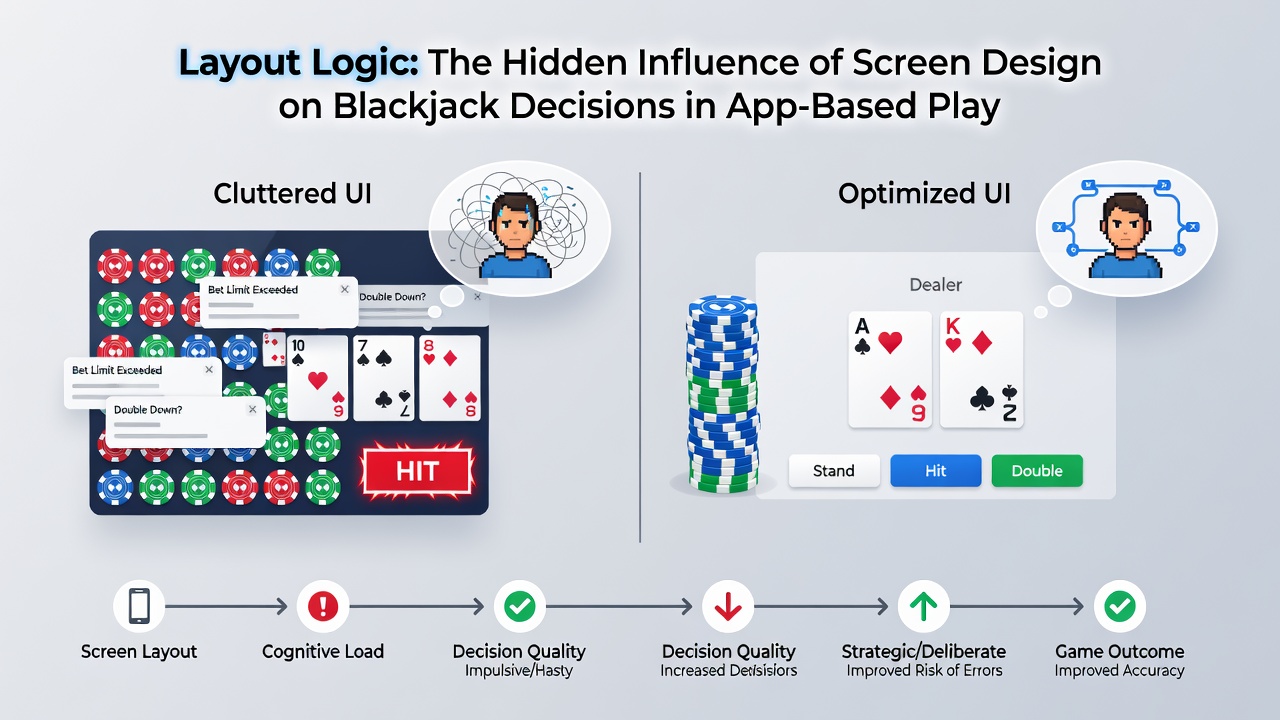
Gesture support expands the range of interactions, since swipe motions for hit commands bypass on-screen buttons entirely in some titles. Implementation varies, with certain apps requiring a longer swipe distance that slows execution compared to tap alternatives. Device orientation further modifies available space, and landscape mode typically grants wider button placement that alters thumb travel distance relative to portrait settings.
Regional Design Adaptations
Regulatory frameworks in different jurisdictions shape allowable interface elements. Canadian provincial operators, for instance, follow guidelines that limit animation intensity to maintain clarity, while Australian frameworks emphasize responsible play prompts integrated into the layout itself. A report issued by the American Gaming Association examined how these regional rules translate into measurable differences in player behavior across similar rule sets. The findings highlighted that prompt placement near decision buttons produced higher interaction rates than corner-positioned warnings.
Academic work from European research centers has explored cognitive load under varied layouts, measuring reaction accuracy when multiple interface elements compete for attention. Those experiments demonstrated that simplified backgrounds paired with bold numerical displays improved recall of previous hand outcomes, which some players use to adjust subsequent strategy. Developers incorporate such insights during iterative updates without altering game mathematics.
Conclusion
Interface design elements in app-based blackjack create measurable effects on decision timing and selection patterns through button arrangement, visual emphasis, and interaction methods. Data collected across platforms shows consistent correlations between layout choices and player actions, independent of rule variations or payout structures. Continued refinement in July 2026 reflects ongoing analysis of session metrics alongside regulatory expectations from multiple regions. Those who track these developments observe that screen logic remains a foundational factor in how digital blackjack unfolds.