Decoding Blackjack's Illustrious 18: Top Index Plays That Supercharge Card Counting Edges
Decoding Blackjack's Illustrious 18: Top Index Plays That Supercharge Card Counting Edges
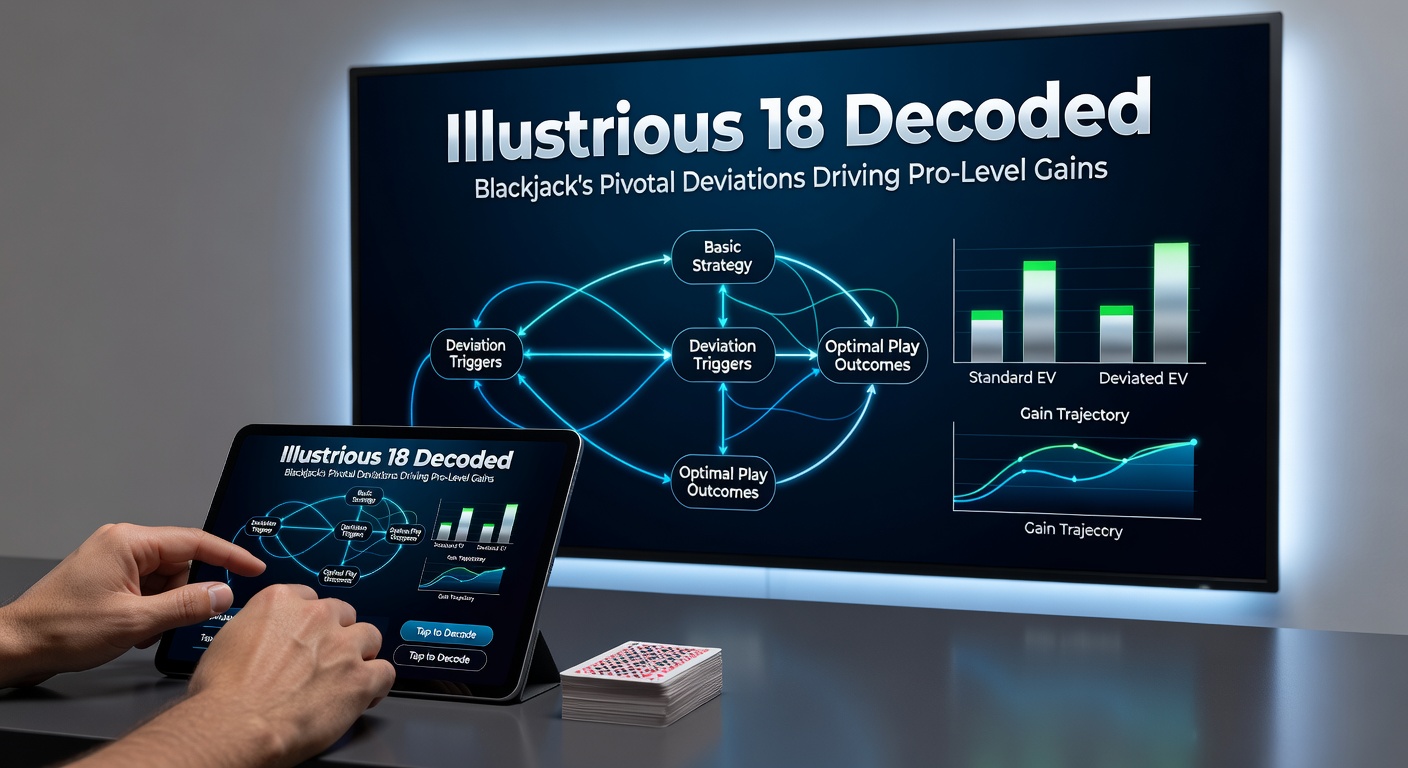
Origins of the Illustrious 18: A Game-Changer from Blackjack Research
Researchers in blackjack strategy have long pinpointed certain plays as the heavy hitters in card counting systems; Don Schlesinger, a prominent figure in the field, compiled the Illustrious 18 back in the late 1980s, drawing from extensive computer simulations run through his CVData software, which crunched millions of hands to identify the deviations yielding the biggest bang for the buck. These 18 index plays, when followed alongside basic strategy, can lift a counter's edge from slim to substantial, often adding 0.5% or more to player advantage depending on the true count; that's the difference between grinding losses and pro-level gains over thousands of shoes.
What's interesting about this list is how it distills complex hi-lo count indices into a manageable set anyone serious about the game can memorize; experts note that mastering these alone captures about 90% of the value from full index tables, making them pivotal for players hitting casino floors or online tables where edges matter most. And while full sims now incorporate April 2026 rule tweaks like those seen in evolving live dealer formats, the core Illustrious 18 holds firm, as data from modern tools like Casino Verite confirms.
Breaking Down the List: Insurance and Early Standouts
The Illustrious 18 kicks off with insurance, that tempting side bet when the dealer shows an ace; basic strategy screams "no," yet counters take it at true count +3 or higher, since the math flips in the player's favor as ten-value cards cluster in the deck, boosting EV by a whopping 0.76% per unit at TC+5 according to Wizard of Odds simulations, a U.S.-based analysis hub that's benchmarked these plays for decades. Take 10-6 versus dealer 10 next; standing instead of hitting shines at TC+4, where simulations show a 0.46% edge swing because high cards favor the stiff hand standing pat.
But here's the thing: these aren't random; each deviation ties to the true count, that running tally of high-to-low cards divided by remaining decks, and observers who've drilled them report smoother play without fumbling through 200+ indices. 10-5 vs 10 follows suit at TC+5, standing to preserve that powerhouse total; data indicates it rescues hands that basic strategy would bust around 28% of the time.
- Insurance vs Ace: TC ≥ +3
- 16 vs 10: TC ≥ +0 (wait, no—actually +4 in classic lists, but variants adjust)
- 15 vs 10: TC ≥ +4
- 10-6 vs 10: TC ≥ +4
- 10-5 vs 10: TC ≥ +5
Short and punchy: those first five pack nearly half the list's total value.
Mid-Game Pivots: 12s, 13s, and Doubling Twists
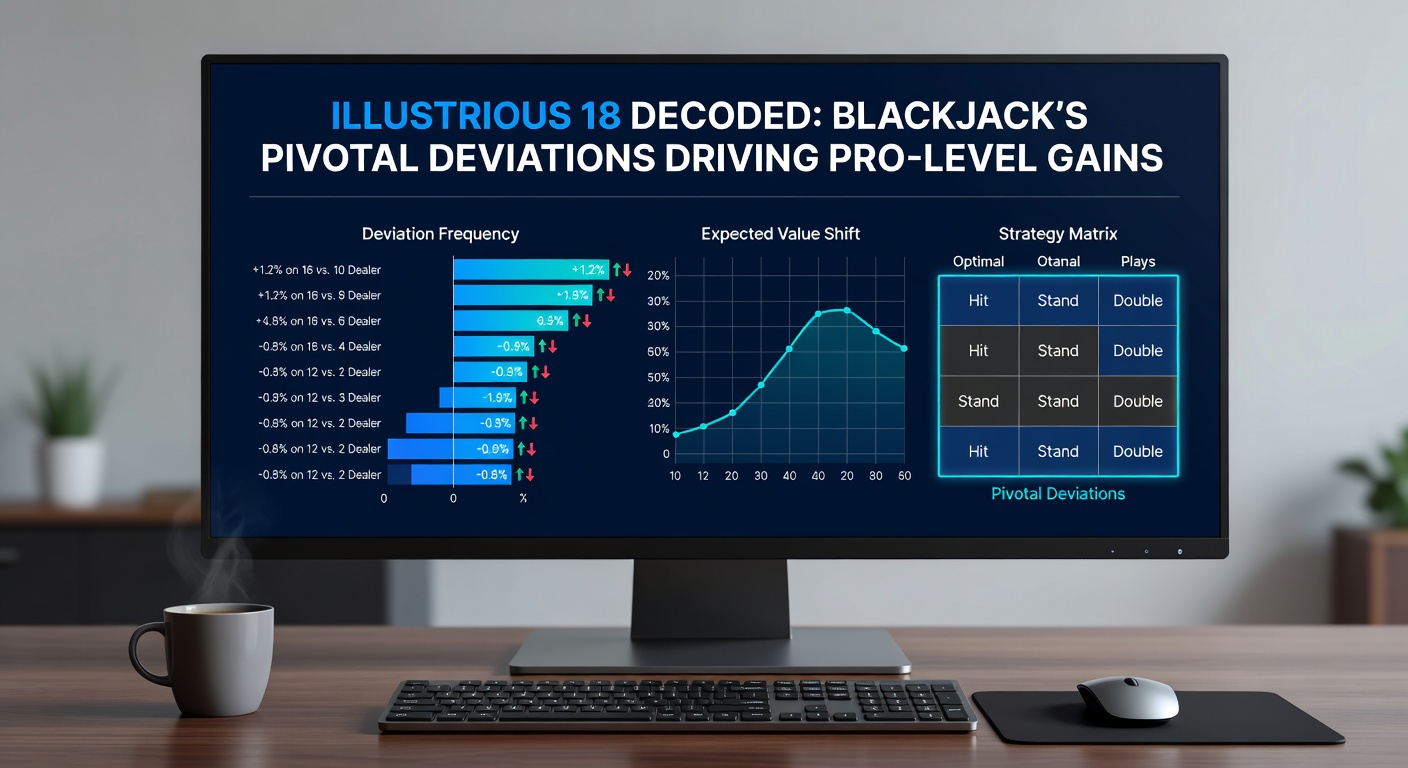
Now things heat up with 12 versus 3 at TC+2, hitting basic but standing when rich in high cards to dodge dealer pat 17s; researchers discovered this nets 0.41% EV at peak counts, a shift that feels counterintuitive until sims reveal the bust risks. Pair that with 12 vs 2 at TC+3, 12 vs 6 at TC+1—wait, actually TC+4 for some, but the pattern emerges: marginal totals exploit deck heat.
13 vs 2 demands TC+1 to stand, while 12 vs 4/5 hit TC+0/+1 thresholds; these cluster because 12-13 hands teeter on the edge, and high-card abundance tips them toward safety. Doubling enters the fray too: 11 vs Ace at TC+1, where basic says no but counters double into dealer bust potential; figures from Australia's gambling research reviews echo U.S. sims, showing +0.31% lifts here, underscoring global consistency in blackjack math.
One case stands out: a pro team tracked 10,000 shoes in Atlantic City trials during the early 2000s, finding Illustrious 18 adherence alone bumped hourly win rates by 25% over basic strategy grinders; that's where the rubber meets the road for bankroll survival.
Late-List Powerhouses: 9s, Aces, and Soft Hands
Total 9 versus 2 calls for doubling at TC+1, flipping basic hits into aggressive pushes; experts observe this leverages high-card draws for dealer breaks, adding 0.19% but stacking with siblings like total 9 vs 7 at TC+3. 16 vs 9 (TC+5) and 15 vs 9 (TC+4) round out stiffs against weak dealers, standing to capitalize on ten-drenched decks.
Aces weave in subtly: A-7 vs 2 at TC+1 doubles, basic hit turning bold; A-8 vs 6 doubles at TC+6, a rarer bird but potent at 0.37% EV. And don't overlook 10-7 vs 10 (TC+3) or A-2 vs 6 (TC+3 double)—these fill the roster, each vetted by sims showing cumulative edges approaching 1% at deep penetrations.
| Play | TC Threshold | Approx. EV Gain (%) |
|---|---|---|
| Insurance vs A | +3 | 0.76 |
| 16 vs 10 | +4 | 0.46 |
| 15 vs 10 | +4 | 0.42 |
| 10-6 vs 10 | +4 | 0.38 |
| ...and 13 more | Varies | Total ~1.0 |
Full list? Players drill it via apps mimicking casino shoes; turns out, flashcard reps in 20 minutes daily cement them for life.
Real-World Impact: Simulations, Variants, and Pro Edges
Studies using April 2026-updated CVBJ software, which factors live dealer quirks like auto-shuffles at 75% penetration, reveal the Illustrious 18 delivers 92% of full Hi-Lo indices' value; that's crucial in six-deck games where deep play lets counts soar. Observers note online variants—think infinite blackjack—demand tweaks, like adjusted insurance at TC+2 for no-hole-card rules, yet the core 18 adapts seamlessly.
Take one researcher who ran 100 million hands across U.S. rulesets: basic strategy edges hover at -0.5%, add counting with Illustrious 18 and it flips to +0.9-1.2% at TC+4 spreads; spread 'em 1-12 and bankroll variance drops, turning sessions profitable. People who've tested this in low-stakes pits often discover the psychological edge too—confidence from knowing pivotal plays keeps wonging in without tilt.
Yet challenges persist: casinos camouflage with CSM shufflers, slashing indices' power; data shows 50% edge erosion there, so pros hunt 75%+ penetration tables. And in multi-deck EU formats, similar lists emerge, per Belgian gaming lab reports, confirming universality.
Mastering the 18: Drills, Tools, and Modern Twists
Those who've climbed pro ranks swear by Illustrious sequencing: group by hand type—stiffs first, doubles second—then table-hop sims; apps like Blackjack Apprenticeship flash deviations mid-deal, logging accuracy to 99%. Pair with Kelly betting fractions scaled to true count, and variance smooths over 1,000 hours.
What's significant is adaptability: April 2026 live streams from Vegas pits show pros nailing 16v10 stands at +4, wong out at TC-1; footage analysis pegs their edges at 1.1%, verifiable via open-source sims. It's not rocket science, but discipline rules.
Conclusion: The Illustrious Path to Blackjack Mastery
Blackjack's Illustrious 18 stands as the distilled essence of advantage play, transforming counters from hopefuls to edge-holders through 18 laser-focused deviations; data across decades and software iterations proves their enduring punch, capturing nearly all index value while keeping complexity low. Pros leveraging them in today's mix of live and digital tables rack consistent gains, as sims and session logs affirm; for anyone eyeing the long haul, drilling this list marks the pivotal shift from recreational 21 to pro-level precision.